For years, agricultural mechanisation in Nigeria has often been dependent on the arrival of large tractors and imported equipment. However, the country's farms…
For years, agricultural mechanisation in Nigeria has often been dependent on the arrival of large tractors and imported equipment. However, the country's farms do not always fit the conditions those machines were designed for.Many smallholder farmers work on relatively small plots, while poor rural roads, limited access to spare parts and the cost of repairs can make traditional machinery difficult to maintain. Most of Nigeria's own agricultural engineers are tackling these by building machines around local conditions rather than expecting farmers to adapt to the machines.
The Problem With Building Bigger Machines
Mechanisation involves a lot more than putting tractors on a farm. These machines have to fit the size and terrain of the farm, as well as the crops being grown.
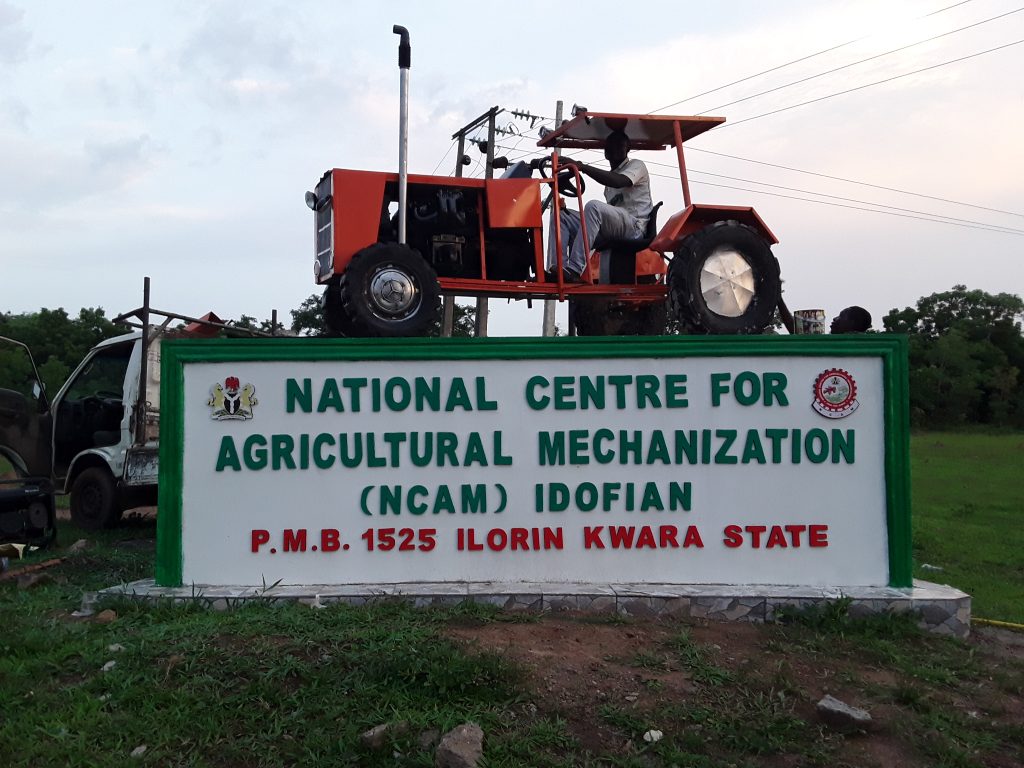
The National Centre for Agricultural Mechanisation (NCAM), Nigeria's main government institution focused on agricultural mechanisation, has made locally adapted machinery part of its mandate. Its work includes developing low-cost equipment using local materials and skills and testing this machinery for Nigerian farming conditions.
A 2015 study of farmers in three local government areas in Kaduna State is a very good example. Researchers looked at a mechanical maize sheller made by local artisan Sule Magaji after farmers in Kasuwan Magani identified maize shelling as a problem. The machine was developed using available materials, and its design was further improved by agricultural engineering experts at Ahmadu Bello University.
A good percentage of the farmers had adopted the locally fabricated sheller, while others were still shelling maize manually. They further reported that the machine saved time, was easier to operate and reduced grain wastage. In all of this, there was still a limitation.
Most of these farmers did not own the machines themselves, therefore still relying on community-owned ones or individuals who offered shelling as a service. For this reason, affordability remained a concern and further explained why creating a system also meant that it had to be affordable.
One of the more unusual attempts to tackle this problem is the Tryctor, a three-wheeled mini tractor developed by Bespoke Design Concepts in collaboration with NCAM.
What stands out was the tractor format that was adapted from the design of a traditional motorcycle. It was manufactured in Kwara State, and its components are sourced, fabricated and assembled locally. It has a 30-horsepower engine and can be fitted with equipment such as a disc plough or harrow. It can also transport farm produce and operate as a generator, giving it more significance beyond field preparation.
It was deliberately designed to be smaller than a conventional tractor. This is because it suits smaller farms and narrower routes where larger machinery is hard to use.
Another advantage is that repairs and replacement components are available in Nigeria.
Researchers also conducted a controlled experiment on smallholder rice farms comparing manual harvesting with mechanisation. Paddy losses during harvesting fell from 9.6% with manual harvesting to 0.9% with mechanised harvesting. Mechanical threshing also recorded an efficiency of 33.1%, compared with 31.1% for the manual process. The study estimated that switching to mechanised processes reduced greenhouse gas emissions associated with farming by 1,696 kilograms of CO₂-equivalent per hectare, largely because less food was being lost. This ultimately led to additional revenue being generated, outweighing the cost of mechanisation.
The centre's current work includes a heavy-duty yam and cassava heap-making machine developed in collaboration with TANTA Motors.
At Ahmadu Bello University, agricultural mechanisation researchers similarly focus on developing and evaluating machinery for Nigerian farmers, particularly small and medium-scale producers, while modifying existing commercial equipment to suit local conditions.
Still, farmers need access to financing, operators need training, and replacement parts need to be available.
In August 2026, the Federal Government unveiled the National Agricultural Mechanisation Policy and National Agricultural Mechanisation Investment Strategy, alongside plans for a tractor assembly plant with a proposed annual capacity of 2,000 to 4,000 units. The stated aim is to increase local production and reduce dependence on imported machinery.
That does not mean Nigeria has completely solved agricultural mechanisation. It means the conversation is beginning to shift towards whether Nigeria can develop its own machinery, ones that farmers can use and afford, maintain and keep working.